

 العربية

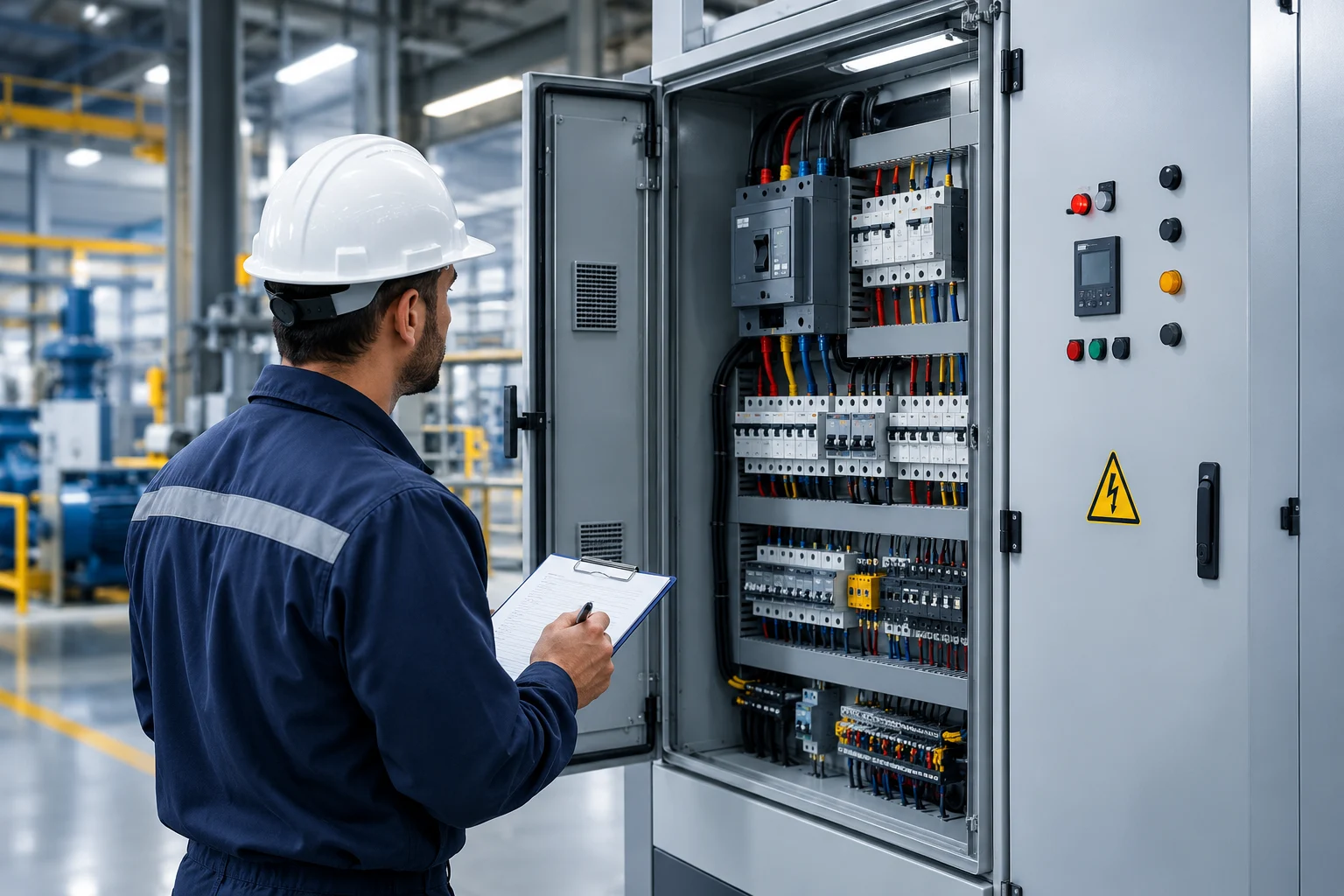
Choosing the wrong electrical panel rarely causes problems on day one. The panel gets installed, it passes inspection, and operations move forward. The trouble usually appears two or three years later, when a production line expands, a new machine gets added, or an inspector flags an enclosure rating that never matched the environment. At that point, correcting an undersized or poorly specified electrical panel is far more disruptive and expensive than getting it right from the start.
For facility managers, plant engineers, and procurement teams, selecting an electrical panel is a decision that shapes capacity, safety, and compliance for the life of the installation. A panel specified without input from operations, maintenance, and design teams often ends up serving only the exact scenario it was built for, with little room to adapt as the facility evolves. This guide walks through what an electrical panel actually does, the technical factors that determine the right choice, the differences between panel types, how sizing and cost interact, and the mistakes that most often lead to costly rework.
What Does an Electrical Panel Do in an Industrial Setting?
An electrical panel is the control point where incoming power from the main supply is received, protected, and distributed to the circuits, machines, and systems that depend on it. Inside the enclosure, components such as circuit breakers, contactors, relays, terminal blocks, and bus bars work together to route power safely and allow operators to isolate circuits when needed.
In an industrial facility, this function goes well beyond simple distribution. A panel protects downstream equipment from overloads and short circuits, supports coordinated shutdowns during maintenance, and often integrates with automation and monitoring systems that track load, temperature, and fault conditions in real time. Facilities that require structured, code-compliant assemblies typically work with a specialized panel building partner rather than assembling components on an ad hoc basis, since panel construction directly affects both safety and long-term reliability.
Why Panel Function Affects Facility Uptime
Because every downstream circuit ultimately traces back to a panel, a loose connection, an overheating breaker, or a single tripped device inside the enclosure can bring an entire production line to a stop. A correctly specified electrical panel isolates faults to the smallest possible section of the system, so one overloaded circuit does not take down unrelated equipment elsewhere in the facility. This is one of the main reasons panel selection deserves the same engineering attention as the machinery it powers, rather than being treated as a routine line item in a procurement list.
Key Selection Factors: Load Capacity, Voltage, Ambient Conditions
Before comparing panel types or sizes, a handful of technical factors determine whether a panel will actually perform as intended over its working life.
Load capacity. The panel’s current rating must comfortably cover the connected load, including motor starting currents and any equipment planned for the next several years. Sizing a panel exactly to today’s load leaves no margin for growth and forces a costly replacement later. Undersized panels are one of the most common reasons facilities outgrow their electrical infrastructure faster than expected, since every new machine or production line addition then requires panel-level changes instead of a simple circuit extension.
Voltage system. Low-voltage and medium-voltage installations require different construction standards, clearances, and protective devices. Confirming the voltage class early avoids specifying the wrong category of panel or protective components, which is a common source of delay during procurement. Where a facility operates both low-voltage distribution and a medium-voltage incoming supply, coordinating panel specifications across both levels early prevents mismatched protective device ratings further downstream.
Ambient conditions. Temperature, humidity, dust, and the presence of corrosive or explosive atmospheres all affect enclosure selection. A panel rated for a clean, air-conditioned control room will not hold up in a dusty production hall or an outdoor substation. Facilities near coastal areas or with corrosive process fumes may also need coated or stainless steel enclosures rather than standard painted mild steel, since corrosion around bus bars and terminals is a common and often underestimated cause of premature failure.
Sound electrical panel design also accounts for bus bar sizing, short-circuit withstand ratings, and internal segregation between power and control wiring. These design choices are usually invisible to non-specialists, but they determine whether the panel performs safely under fault conditions. Components sourced from a reliable low voltage products range, including breakers and protection devices matched to the facility’s actual load profile, make a measurable difference in long-term reliability.
Electrical Panel Cost Considerations
Electrical panel cost is shaped by more than the price of the enclosure itself. Component selection, current rating, ingress protection level, enclosure material, and the amount of spare capacity built in all affect the final price. A panel priced only against today’s minimum requirement often looks cheaper on paper but tends to cost more over its service life, once the expense of retrofitting, downtime during modification, and premature replacement are factored in.
Facilities that compare electrical panel design proposals on installed cost alone, without accounting for spare ways, cable management, and future accessibility, frequently find that the lowest bid becomes the most expensive option within a few years of operation. A more reliable approach is to request a cost breakdown that separates enclosure, components, engineering, and testing, so that trade-offs are visible instead of hidden inside a single lump-sum figure.
Panel Types (Distribution, Control, Motor Control Centers)
Not every application needs the same category of panel. The three most common types found in industrial facilities are:
- Distribution panels (main and sub-main distribution boards) receive incoming power and distribute it to downstream panels, lighting circuits, and equipment feeders. They form the backbone of the facility’s electrical infrastructure and are usually sized around the largest anticipated site-wide load.
- Control panels house the relays, PLCs, switches, and indicators used to operate and monitor specific machines or processes. They are typically smaller and more customized than distribution boards, and their layout is often driven by the automation logic of the equipment they serve.
- Motor control centers (MCCs) group multiple motor starters, drives, and protective devices in a single structured assembly, simplifying the control of pumps, fans, compressors, and other rotating equipment across a facility, while making future motor additions easier to plan for.
Choosing between these categories usually comes down to how centralized or distributed the facility’s control needs are. A single large distribution panel feeding several dedicated control panels for individual production lines is common in facilities with varied processes, while sites with many motor-driven systems, such as water treatment plants or bulk material handling operations, often standardize around MCCs to simplify spare parts, wiring, and future motor additions. Reviewing the full range of electrical panels available helps clarify which combination fits a specific process layout.
Electrical Panel Sizing and How to Choose the Right Size
There is no single universal size for an industrial electrical panel board. Dimensions depend on the number of circuits, the current rating of the incoming supply, the space required for future feeders, and the enclosure type needed for the environment. That said, panels are generally grouped into broad categories that help narrow down the right fit:
| Category | Typical Use | Key Consideration |
|---|---|---|
| Small distribution boards | Lighting circuits, small equipment feeders | Limited spare capacity, lower current ratings |
| Medium industrial panels | Sub-main distribution, dedicated control panels | Moderate spare ways for future circuits |
| Large distribution and MCCs | Main incoming supply, multiple motor loads | Higher short-circuit ratings, structured segregation |
These categories are only a starting point. Two facilities with identical current ratings can still need very different enclosure sizes, depending on whether the panel houses simple breakers or a dense arrangement of drives, PLCs, and metering equipment that requires additional internal clearance for heat dissipation and wiring.
Working With a Panel Builder on Sizing
Rather than choosing a size in isolation, it helps to work backward from a single-line diagram that accounts for present loads, planned expansions, and code-required spare capacity. An experienced panel builder will typically review the single-line diagram, confirm the required IP or NEMA rating, and propose enclosure dimensions that leave room for at least one additional expansion cycle, rather than sizing strictly to the initial load list. This collaborative step catches sizing gaps before manufacturing begins, when adjustments are still inexpensive to make.
Panel assemblies designed and verified in accordance with standards such as IEC 61439 are assessed as complete systems, providing a more reliable basis for sizing and performance evaluation than estimating enclosure dimensions alone. The International Electrotechnical Commission publishes the technical requirements that govern these low-voltage assemblies.
Common Sizing and Design Mistakes
Even experienced teams run into avoidable issues when specifying an electrical panel. The most frequent mistakes include:
- Sizing for current load only, with no allowance for future circuits or equipment additions, which forces premature panel replacement as the facility grows.
- Ignoring ambient temperature derating, which reduces the effective current rating of breakers and cables once the panel is installed in a hot environment.
- Selecting the wrong ingress protection (IP) rating for dusty, humid, or outdoor locations, leading to accelerated wear on internal components.
- Underestimating short-circuit withstand requirements, leaving the panel vulnerable to catastrophic damage during fault conditions.
- Poor internal layout, with inadequate spacing between power and control wiring, which complicates maintenance and troubleshooting and increases the risk of interference.
- Skipping spare breaker positions, forcing a full panel replacement for even minor future additions instead of a straightforward circuit extension.
- Overlooking labeling and documentation, which slows down troubleshooting and increases risk for maintenance staff during emergency shutdowns.
- Choosing a panel based on purchase price alone, without an engineering review of the specification, which often shifts costs into later modification and downtime rather than eliminating them.
Many of these mistakes surface only after the panel has been in service for a while, often showing up as nuisance tripping, overheating, or difficulty adding new circuits. A closer look at these operational symptoms is covered in Common Electrical Panel Problems and How to Fix Them, which walks through how design shortcomings tend to show up in daily operation.
Compliance and Safety Standards to Check
Before a panel goes into service, it should meet applicable electrical safety and construction standards. While specific requirements vary by country and application, industrial facilities typically need to confirm:
- The panel assembly is designed and tested in line with recognized low-voltage switchgear standards.
- Enclosure ratings, expressed as IP codes under IEC 60529, are appropriate to the installation environment, whether that means dust, moisture, or outdoor exposure.
- Protective devices are correctly rated for the available fault current at the point of installation.
- Clearances, labeling, and lockout and tagout provisions meet workplace electrical safety requirements, including guidance from bodies such as the Occupational Safety and Health Administration.
- Documentation, including test certificates, single-line diagrams, and as-built drawings, is available and kept current after any modification.
Documentation to Keep on File
Compliance documentation is often overlooked until an audit or an incident makes it urgent. Test certificates, single-line diagrams, and as-built drawings should be kept accessible for the life of the installation, since insurers, auditors, and maintenance teams all rely on this documentation to verify that a panel still matches its original design intent after modifications. Confirming compliance is not a one-time check at handover: panels benefit from periodic diagnostics and testing services to verify that protective devices, insulation, and connections continue to perform as designed, particularly in facilities running continuous operations.
ARC Technologies Panel Building Capabilities
ARC Technologies designs and manufactures industrial electrical panels from its dedicated panel-building facility, combining in-house fabrication with engineering support to match panel specifications to the actual operating environment. As an official ABB partner in Egypt, ARC Technologies is also an official ABB panel manufacturer, giving facility teams access to internationally recognized components within locally built, code-compliant panels.
The team supports the full process, from load calculations and single-line diagrams through to enclosure selection, testing, and commissioning. For facilities working specifically with low-voltage systems, ARC’s low voltage panel builder capability covers everything from distribution boards to motor control assemblies, while its wider ABB panel manufacturer capability extends to panels built around ABB components for facilities standardizing on that ecosystem.
What a Panel Design Consultation Covers
A design consultation typically starts with a review of the facility’s current single-line diagram and load list, followed by a discussion of expected growth over the next several years. From there, the team recommends panel type, enclosure rating, and component brands suited to the environment and provides a cost breakdown that separates enclosure, components, and labor so trade-offs are clear before manufacturing begins.
Choosing the right electrical panel is easiest with a clear picture of current loads, planned growth, and site conditions in hand. If that picture isn’t fully mapped out yet, request a custom panel design consultation from ARC Technologies to work through load calculations, panel type, and compliance requirements before specifying equipment.
1 Comment
ABB vs Siemens PLC: Which Automation Partner to Pick?
October 19, 2026[…] is Siemens or ABB comes second to whether those basics were respected, and the same goes for choosing the right electrical panel in the first […]
Comments are closed.