

 العربية

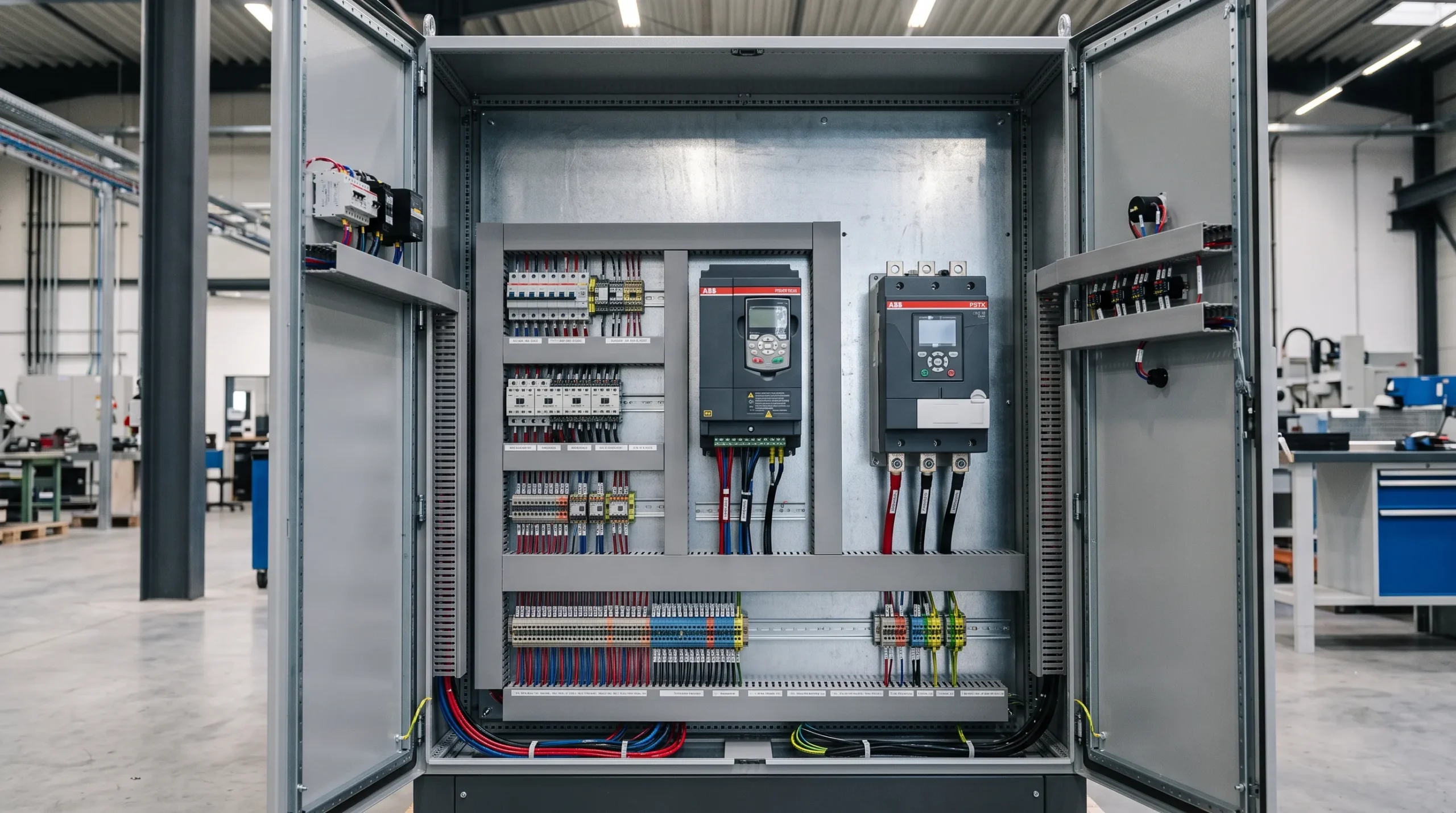
Choosing between a variable frequency drive vs soft starter comes down to whether your application needs continuous process regulation or simply a smooth, low-current startup. A pump that trips the breaker every morning, a conveyor that jerks product off the belt, or a fan running flat out at 50 Hz when the process needs half of that are all motor control challenges solved by these two devices.
At ARC Technologies, we build and commission motor control panels in Egypt for facilities across the country, and this comparison is essential to sizing the right electrical panel.
What Is the Operational Difference in a Variable Frequency Drive vs Soft Starter Setup?
A soft starter ramps voltage up gradually so the motor starts smoothly, then steps out of the way and lets the motor run at full line speed. A variable frequency drive changes both voltage and frequency, so it controls speed the whole time the motor runs, not only during start. One manages the start, the other manages the process.
Inside a soft starter, thyristors raise the voltage applied to the motor over a ramp time you set, usually a few seconds. Once the motor reaches speed, a bypass contactor takes over so the thyristors stop making heat. From then on the motor behaves as it would on a plain contactor. Many units also offer a soft stop, which matters more than people expect on pumps, where an abrupt stop sends a pressure wave through the pipework.
A drive works differently. It converts incoming AC to DC, then builds a fresh AC waveform at whatever frequency you ask for. Motor speed follows frequency, so the drive can run the same motor at 20 Hz, 35 Hz, or 50 Hz, hold torque at low speed, and decelerate on command. You will see it quoted as a VFD, an inverter, or a variable frequency drive in Egypt, and it is the same device under three names.
Both families are covered by IEC standards: soft starters sit under the IEC 60947 low-voltage switchgear series, and adjustable speed drives under IEC 61800. When you compare offers, ask which parts of those standards the unit has been tested to (the IEC website lists both series).
How does a star delta starter compare, and is it still worth using?
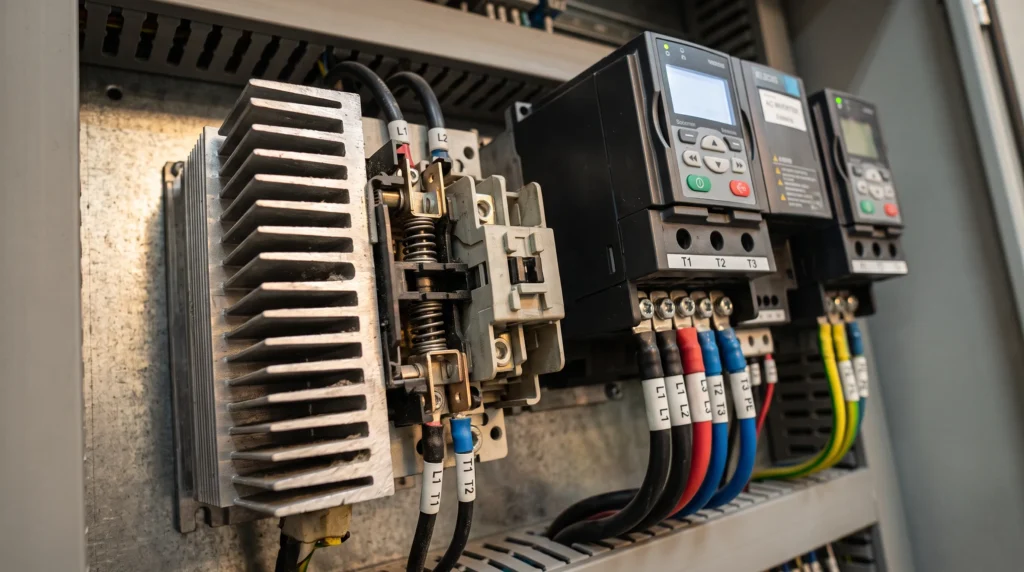
A star delta starter cuts starting current to roughly a third of direct-on-line, using three contactors and a timer, at very low cost. The drawback is a sudden torque jump at the changeover and no speed control. It still suits light-load motors that start unloaded, but a soft starter handles the same job with less mechanical shock.
The motor has to be wound for delta operation at your line voltage, with all six terminals brought out. A star delta starter is still a familiar sight in older pump rooms and compressor houses, partly because it is cheap and every maintenance team knows how to fix it. If all you need is a basic motor starter in Egypt for a pump or fan that starts unloaded, star delta is a perfectly reasonable answer.
The weak point is the changeover. When the timer drops star and closes delta, the motor sees a brief open transition, then a jump in current and torque. On a lightly loaded fan you will never notice. On a loaded crusher or a long conveyor you will hear it, and your gearbox will feel it.
If your existing starter causes no trouble, there is no urgent reason to replace it. If you see breakers tripping at changeover, couplings wearing early, or you need to start under load, a soft starter is the natural upgrade. Starter replacement is a normal part of our Modernization & Retrofit Services, and the existing motor cabling can sometimes be reused once it has been checked on site.
When should you choose a soft starter?
Choose a soft starter when the motor runs at constant speed and the problem is only the start: high inrush current, belt or coupling shock, or water hammer in pumps. It costs less than a drive, takes less panel space, and gives smooth acceleration without changing how the motor runs afterward.
The applications where we see them earn their place:
- Centrifugal pumps on booster and irrigation stations, where water hammer is the real enemy.
- Belt conveyors that spill or shift product when they lurch into motion.
- Compressors and crushers that only need a gentler start.
- Motors on weak or generator-fed supplies, where starting current drags the voltage down for everything else.
That last one deserves a note. On a site running from a standby generator, a direct-on-line start can pull the voltage down and nuisance-trip other equipment. Limiting the starting current keeps the genset steady. If you are sourcing a soft starter in Egypt for this kind of site, give the supplier your generator rating, not only the motor kW.
There are limits. A soft starter gives you no speed control, and starting too often can overheat it, so check the starts-per-hour rating in the datasheet before you commit.
When does a VFD make more sense?
Pick a VFD when the process needs different speeds or flows, when the motor starts under heavy load, or when energy cost matters. Fans and centrifugal pumps benefit most, because power falls steeply as speed drops. If the load always needs full speed, a drive is usually more than you need.
Take a cooling tower fan. In ideal conditions, power draw falls with the cube of speed, so slowing the fan by 20 percent cuts the power it draws to roughly half. Real systems lose some of that to drive and motor losses and, on pumps, to static head. The direction holds, though, which is why drives repay faster on fans and pumps than on almost anything else.
Other places a drive earns its keep: water treatment plants holding constant pressure, air handling units in hospitals and malls, mixers and extruders where speed is part of the recipe, and packaging lines that need several motors to run in step. A variable frequency drive also starts the motor with very low inrush, so you get the soft starter benefit as a side effect.
The flip side is the fixed-speed motor. Putting a drive on a motor that always runs at 50 Hz means paying for power electronics you never use and adding one more component that can fail.
How do PLC and VFD systems work together?
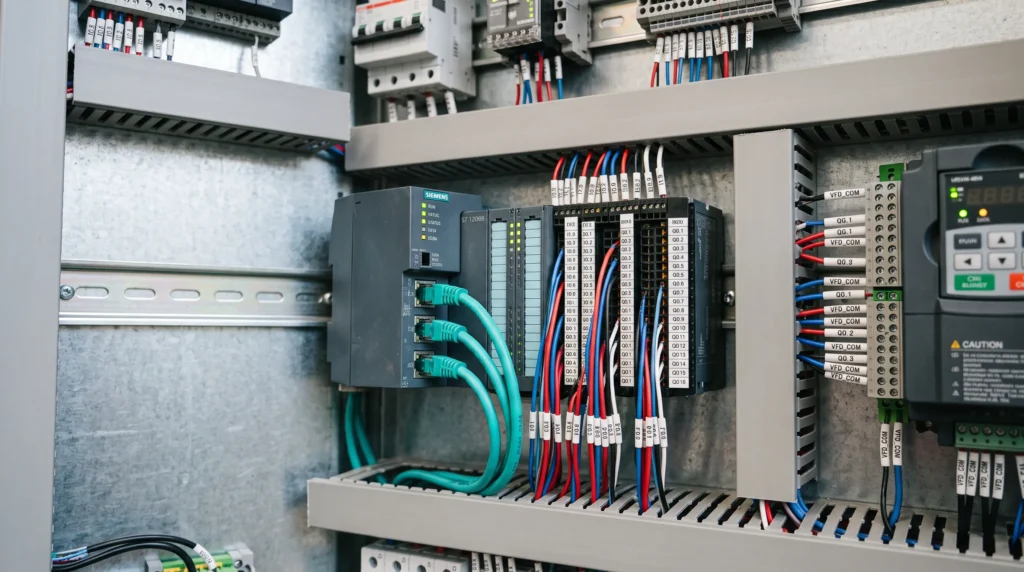
The PLC sends a speed reference and start command to the drive, either through hardwired signals or a fieldbus such as Profinet or Modbus, and reads back status, current, and faults. This lets the process logic control motor speed directly, while the drive protects the motor and handles the power side.
On a typical water line, the PLC reads a pressure transmitter, runs a PID loop, and writes the speed reference to the drive. Hardwired 4–20 mA and digital inputs are fine for a single pump. For anything larger, a fieldbus saves a lot of wiring and hands the PLC the drive’s current, torque, running hours, and fault codes. That is genuine diagnostic data for your maintenance team, and it costs nothing extra once the network exists.
Wire the safe torque off input to your safety relay at the design stage, not as an afterthought. Our Industrial Automation Solutions team designs the PLC logic together with the panel, so you do not end up with a variable frequency drive that nobody can talk to.
How much does a VFD cost compared to a soft starter?
A soft starter is generally the cheaper of the two at purchase, and a drive costs more because it handles power conversion continuously. But the purchase price is only part of it. Add harmonic filters, cabling, cooling, and commissioning, then compare against the energy a drive can save over the motor’s life.
Drives usually need shielded motor cable and often a line reactor or filter. They also give off heat and lose output capacity as ambient temperature climbs. Summer panel temperatures in Egypt matter more than the datasheet suggests, so we design ventilation or a cooled enclosure at the Panel Building stage. That is far cheaper than discovering the derating problem in July.
Run hours decide the payback. A pump running around the clock against varying demand repays a drive quickly. A motor that starts twice a shift never will. Ask for the duty cycle before anyone asks for a price.
Three plant cases and what we would specify
- A booster pump station: If the pumps run at a fixed duty and the complaint is pressure surges at start and stop, a soft starter with soft stop is the economical answer. If the network needs constant pressure while demand swings through the day, go straight to a drive with a PID loop.
- Chilled water pumps and air handlers: Demand follows the weather and occupancy, so these loads spend most of their life below full speed. A drive pays for itself here, and the speed control also takes the strain off belts and bearings.
- A loaded belt conveyor: If it runs at one speed, a soft starter with current limit protects the belt and gearbox. If the line speed must match upstream and downstream machines, use a drive, and size it for the starting torque of a loaded belt, not the running torque.
What should you check in the panel before you order?
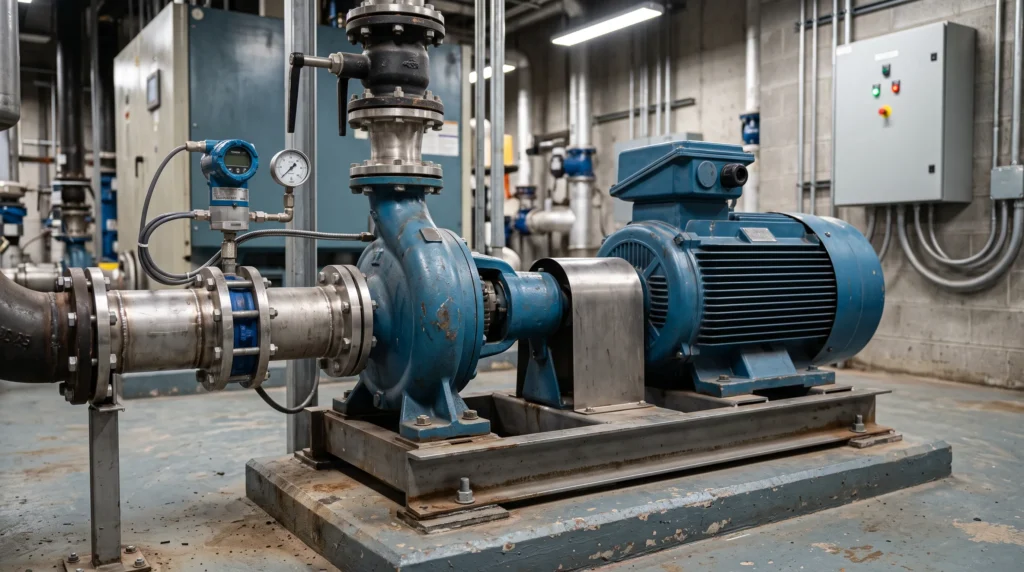
Both devices need correct upstream protection and coordination with the breaker, and the short-circuit rating of the finished panel has to match the site. A drive adds harmonics to your supply, so where many drives share one transformer, check the harmonic levels against IEEE 519 (the IEEE standards site is the place to start) and consider reactors or filters. Keep motor cable runs in mind too, because long runs may need output filters.
As an official ABB partner and official ABB panel manufacturer, ARC builds starter and drive panels around ABB components, with the enclosure, protection, and cooling designed as one system. ABB publishes the full drives range on its official drives page.
Once the panel is running, small habits keep it that way: clean the cooling fans and filters, retighten power terminals, and log the drive fault history. Our Maintenance Services team can fold these checks into your routine rounds.
Quick Comparison: Star Delta vs Soft Starter vs VFD
Feature | Star Delta Starter | Soft Starter | Variable Frequency Drive (VFD) |
Speed Control | None (Fixed 100%) | None (Fixed 100%) | Full continuous control (0–100%+) |
Starting Current | Reduced (~33% of DOL) | Adjustable limit (typically 2–4x In) | Minimal (<100% In) |
Mechanical Shock | Noticeable step at changeover | Smooth ramp up & soft stop | Smooth acceleration & deceleration |
Panel Footprint | Moderate (3 contactors + timer) | Compact | Larger (needs ventilation / heat sink) |
Energy Optimization | None | None during run | High on variable loads (pumps/fans) |
Relative Cost | Lowest | Medium | Higher |
A simple way to decide
Work through these in order:
- Does the process need more than one speed? Then you need a drive.
- If not, is the start the only problem (inrush, shock, water hammer)? Then a soft starter fits.
- Does the motor start rarely, with a light load and no complaints? A star delta starter or direct-on-line is fine.
- Is the supply weak or generator-fed? Lean toward a soft starter or a drive, never direct-on-line.
If you are still unsure, ask for a load profile before committing to a variable frequency drive on a motor that never changes speed. Two weeks of logged current and run hours will usually settle the argument faster than any datasheet.
Talk to ARC Technologies Engineers
Not sure whether your motor needs a drive, a soft starter, or just a better star delta setup? Send us the motor ratings, the load type, and how often it starts. Our engineers will recommend the right solution and prepare a technical quote, panel included. Request a technical quote or contact the ARC team today.

Leave a comment