

 العربية
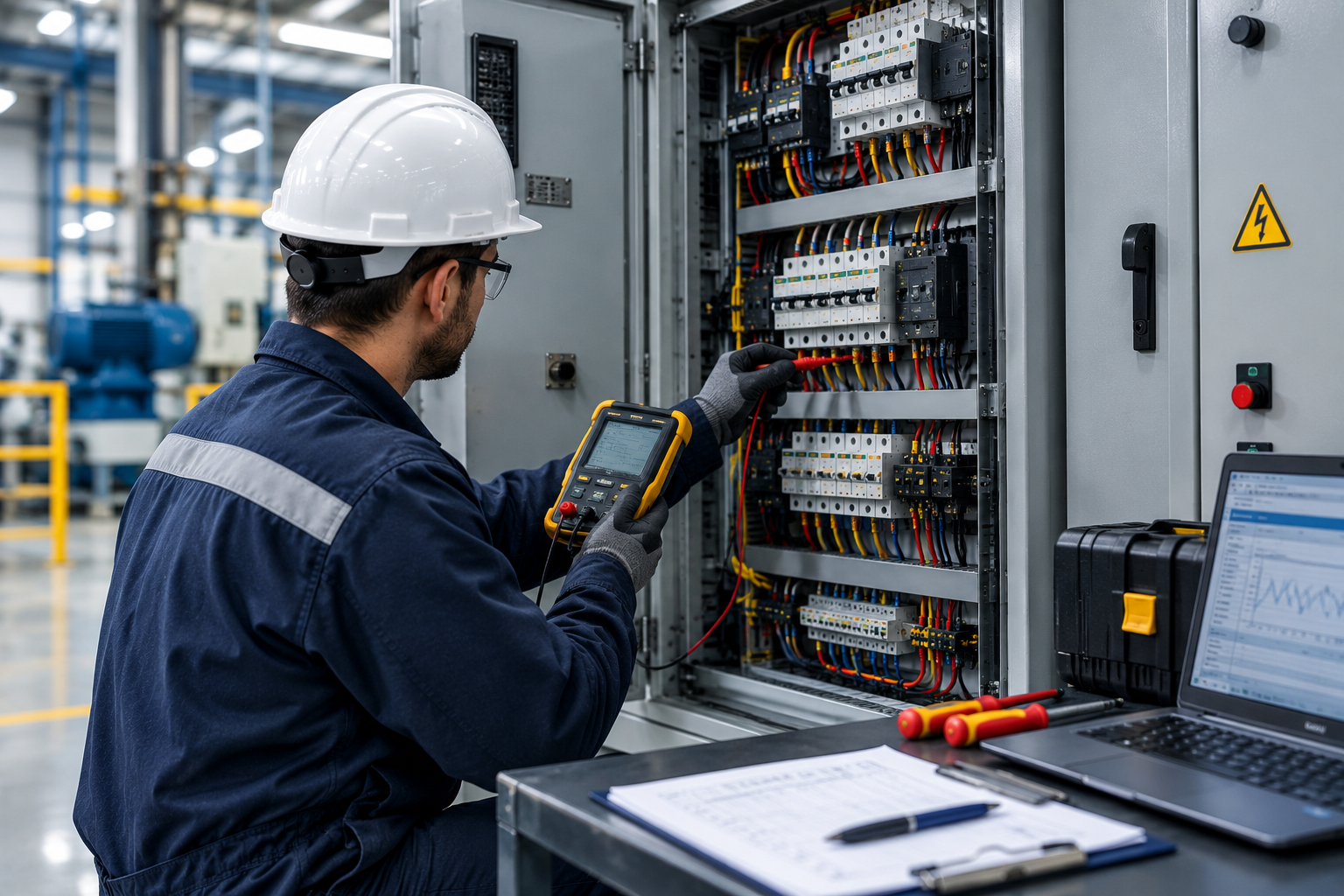
An electrical panel can look perfectly normal from the outside while a developing fault remains hidden inside. Loose connections do not always produce immediate symptoms, insulation deterioration often happens gradually, and abnormal heat can build up long before anyone notices a visible problem.
That is why electrical panel testing and inspection should be part of a planned maintenance strategy rather than something triggered only after a breaker trips, equipment fails, or a burning smell appears.
For facility managers, maintenance teams, and plant engineers, the difference between a controlled maintenance shutdown and an unexpected production interruption often comes down to how early a developing problem is identified.
This guide explains what an effective electrical panel inspection program should include, which testing methods are commonly used, how inspection frequency should be determined, and which warning signs require immediate attention.
Why Regular Electrical Panel Testing Matters
Electrical panels sit at the center of an industrial facility’s power distribution system. Motors, production lines, lighting systems, pumps, control circuits, and other critical equipment all depend on reliable electrical distribution.
When a panel develops a fault, the consequences can extend far beyond the enclosure itself.
Regular testing and inspection can help facilities:
- Identify loose or deteriorating connections before excessive heat causes equipment damage
- Detect insulation degradation, moisture ingress, contamination, or corrosion
- Reduce the likelihood of unexpected equipment failures
- Support safer maintenance planning and controlled shutdowns
- Establish baseline data that makes it easier to identify deterioration over time
- Improve maintenance documentation and asset reliability
Industry maintenance standards emphasize the importance of periodic inspection and testing when assessing whether electrical equipment remains suitable for continued service. A structured testing program helps facilities evaluate equipment condition, identify developing faults, and make maintenance decisions based on documented findings.
A panel that has not been inspected for years is not necessarily operating safely. It simply has not been properly assessed.
For facilities developing a broader reliability strategy, electrical panel inspection should also be connected to a structured industrial maintenance program rather than treated as an isolated activity.
Electrical Panel Visual Inspection Checklist
Visual inspection is often the first layer of an effective electrical maintenance program. It can identify obvious signs of deterioration before they progress into more serious failures.
Depending on the scope of work and equipment condition, inspection activities involving energized equipment must only be carried out by qualified personnel following appropriate electrical safety procedures.
During an electrical panel inspection, technicians may look for:
- Discoloration or scorch marks on busbars, terminals, breakers, or other components
- Signs of moisture, corrosion, or excessive dust accumulation
- Missing, damaged, or improperly secured panel covers and components
- Cracked, brittle, or damaged insulation
- Physical damage to the enclosure, hinges, seals, or doors
- Loose hardware or visibly deteriorated connections
- Missing or inaccurate circuit identification and warning labels
- Unusual odors that may indicate overheating or insulation degradation
Visual inspections are also recognized as an important method for identifying evidence of overheating, arcing, contamination, corrosion, and other developing equipment issues.
Not every observation requires the same level of urgency. A damaged label may be corrected during planned maintenance, while visible scorching or insulation damage should trigger a more detailed technical assessment.
Thermal Imaging: Detecting Problems Before Failure
Some electrical faults cannot be identified through visual inspection alone. A connection may appear normal while excessive resistance causes it to operate at an abnormally high temperature.
This is where thermal imaging becomes particularly valuable.
Infrared thermography allows technicians to examine temperature patterns while electrical equipment is operating under normal load conditions. A thermal scan can help identify:
- Hot spots at terminals and connection points
- Abnormal temperature differences between similar components
- Uneven heating between electrical phases
- Overloaded circuits or components
- Developing issues in breakers, busbars, and cable connections
The greatest value of thermal imaging often comes from trend analysis. A single scan provides a snapshot, but repeated inspections allow maintenance teams to establish a baseline and monitor whether a specific component is gradually operating at a higher temperature over time.
Thermal imaging should not replace electrical testing. Instead, it works as part of a broader diagnostic approach that combines visual inspection, measurements, testing, and equipment history.
For facilities looking to move from periodic inspections toward more data-driven asset monitoring, ABB Ability Energy Management solutions can support broader visibility into electrical system performance and energy-related trends.
Electrical Testing Methods for Industrial Panels
Visual inspection and thermal imaging can indicate where a potential problem exists. Electrical testing helps determine the actual condition of equipment and identify whether deterioration is affecting system performance.
The specific tests required will depend on the panel type, voltage level, equipment criticality, manufacturer recommendations, and applicable standards.
Common electrical panel testing methods include:
Insulation Resistance Testing
Insulation resistance testing evaluates the condition of insulating materials around conductors and electrical components.
A declining insulation resistance trend may indicate issues such as:
- Moisture ingress
- Contamination
- Thermal aging
- Physical insulation damage
Trend data is often more valuable than relying on a single measurement because it helps maintenance teams identify gradual deterioration.
Load Analysis
Load testing and analysis help determine whether circuits are operating within acceptable capacity and whether electrical loads are reasonably balanced.
Persistent overload conditions can increase thermal stress on conductors, breakers, and other electrical components. Phase imbalance can also contribute to inefficient operation and additional stress on connected equipment.
Where recurring electrical issues affect multiple systems rather than a single panel, facilities may also benefit from broader electrical diagnostics and testing services.
Contact Resistance Testing
Contact resistance testing evaluates the quality of electrical connections and contact surfaces, including:
- Circuit breaker contacts
- Busbar joints
- Cable terminations
- Connection points within switching equipment
Increasing resistance at a connection can generate additional heat when current flows through the circuit, making early detection particularly important for heavily loaded equipment.
Torque Verification
Loose mechanical connections are a common source of electrical overheating.
Torque verification helps ensure that bolted electrical connections are tightened according to appropriate manufacturer specifications and maintenance procedures. This should be performed carefully and within a qualified maintenance process rather than treated as a simple routine tightening exercise.
Together, these activities form part of a broader electrical equipment testing strategy. Standards such as the ANSI/NETA maintenance testing framework are designed to help organizations assess whether electrical power equipment remains suitable for continued operation.
How Often Should Electrical Panels Be Inspected?
There is no universal inspection interval that applies to every industrial facility.
The appropriate frequency depends on factors such as:
- Equipment criticality
- Panel age and condition
- Operating environment
- Load levels
- Exposure to heat, humidity, dust, or vibration
- Previous maintenance history
- Manufacturer recommendations
- Applicable regulatory and safety requirements
The following table can serve as a general planning framework, but actual maintenance intervals should be based on the facility’s equipment condition and risk profile.
| Inspection Type | Typical Planning Frequency | Considerations |
| Visual inspection | Monthly to quarterly | Increase frequency for critical or heavily loaded panels. |
| Thermal imaging | Semi-annually to annually | More frequent monitoring may be appropriate for higher-risk equipment |
| Insulation resistance testing | Typically during planned maintenance intervals | Frequency should consider equipment type and environmental conditions. |
| Load and connection testing | Based on equipment criticality and maintenance planning | Often coordinated with planned shutdowns |
| Comprehensive panel inspection | Annually or according to a risk-based maintenance strategy | Consider manufacturer guidance and applicable standards. |
Maintenance strategies increasingly emphasize condition-based and risk-based approaches rather than assuming that every piece of equipment requires the same inspection interval. Factors such as equipment criticality, operating conditions, load levels, maintenance history, and environmental exposure should all influence the inspection schedule.
Inspection frequency should also be reassessed after:
- A major electrical fault
- Significant load increases
- Equipment modifications
- Environmental changes
- Water exposure or contamination
- Repeated breaker trips or unexplained electrical disturbances
Older electrical infrastructure may also require a broader evaluation to determine whether continued maintenance is sufficient or whether modernization should be considered.
Warning Signs That Require Immediate Attention
Certain conditions should not wait until the next scheduled maintenance visit.
If any of the following signs are observed, the equipment should be assessed immediately by qualified electrical personnel, and appropriate safety procedures should be followed before any intervention:
- Burning smells near the electrical panel
- Visible smoke
- Buzzing, crackling, or unusual sounds
- Discoloration, melting, or scorch marks
- Repeated unexplained breaker trips
- Visible sparking or signs of arcing
- Significant abnormal hot spots identified during thermal imaging
- Excessive heat on the panel enclosure
- Signs of water ingress or severe contamination
These conditions may indicate an active fault or significant equipment deterioration.
The priority should not simply be restoring equipment to operation as quickly as possible. The underlying cause should be identified and documented to reduce the risk of recurrence.
Building Electrical Panel Inspection Into a Maintenance Strategy
The most effective inspection programs do more than generate a checklist.
They create a record of equipment condition over time.
A practical electrical panel maintenance strategy should include:
- Equipment identification and criticality ranking
- Defined inspection and testing procedures
- Baseline measurements where appropriate
- Documentation of findings and corrective actions
- Trend monitoring for recurring or deteriorating conditions
- Clear escalation procedures for critical findings
This approach makes it easier to prioritize maintenance resources. Instead of treating every electrical panel as equally urgent, facility teams can focus attention on equipment with the greatest operational or safety impact.
When inspections identify aging equipment, repeated overheating, or limitations in the existing distribution system, the solution may extend beyond maintenance. In those situations, evaluating electrical panel building and upgrade options can help determine whether repair, retrofit, or replacement is the most appropriate long-term strategy.
ARC Technologies Electrical Panel Testing & Inspection Services
ARC Technologies provides diagnostic and testing services for industrial electrical systems, including insulation resistance testing, relay testing, load analysis, and power quality assessment across low- and medium-voltage applications.
The objective is not simply to identify faults after they occur but to help facilities understand developing equipment issues before they lead to unplanned downtime.
Where an inspection identifies deteriorated components or aging infrastructure, ARC can also support the next stage through its electrical engineering capabilities, including low-voltage electrical products and solutions and panel building expertise.
A structured inspection program can help turn electrical maintenance from a reactive process into a more predictable reliability strategy.
Book an electrical panel inspection with ARC Technologies to discuss a testing and inspection approach based on your facility’s equipment, operating environment, and maintenance priorities.
1 Comment
Switchgear Testing and Commissioning Egypt by ARC
October 5, 2026[…] earth continuity, contact resistance, protection relay testing and functional checks. A broader electrical panel testing and inspection approach can also help facilities establish a baseline for ongoing […]
Comments are closed.