

 العربية

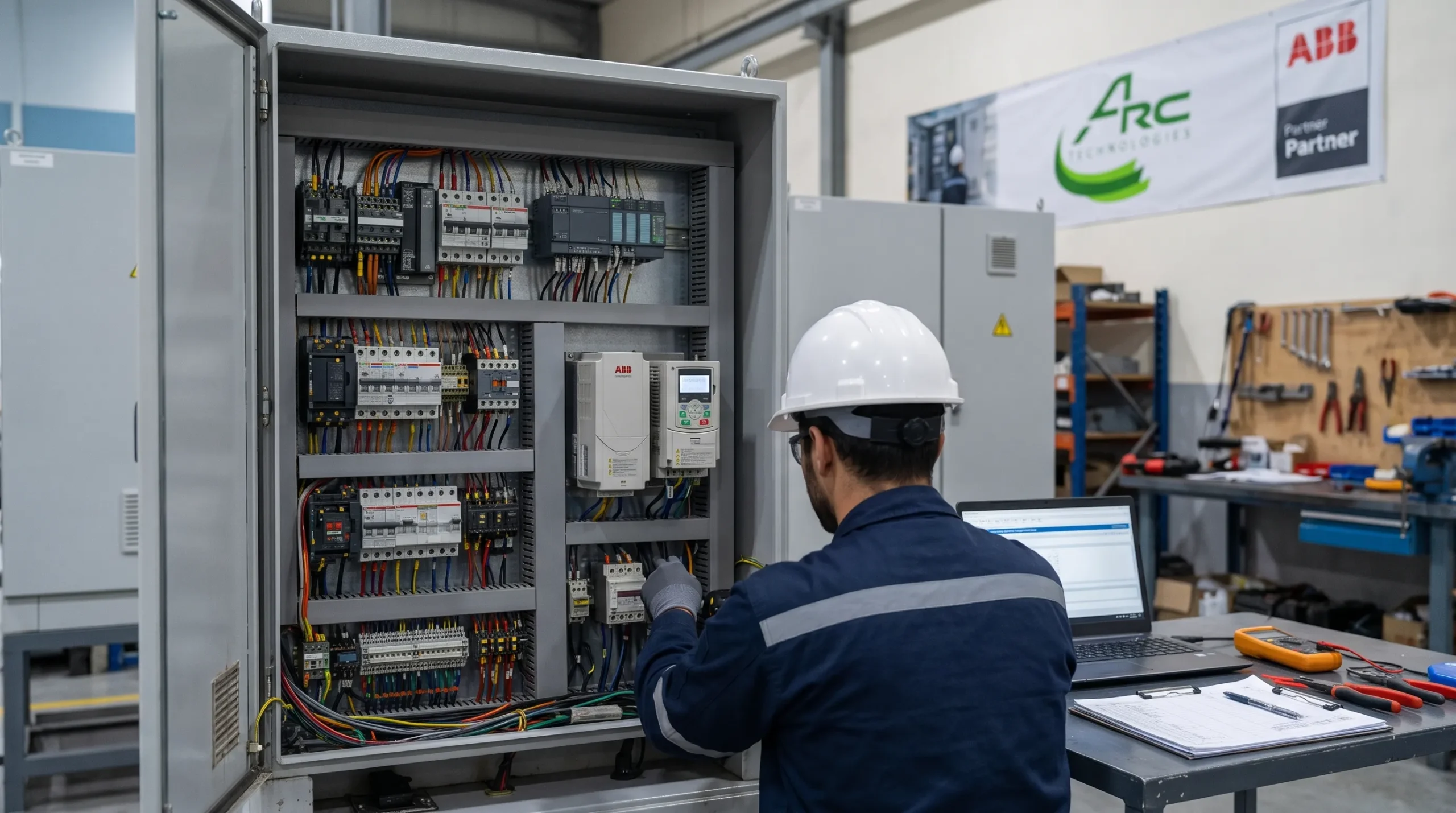
A pump is only as reliable as the panel that starts, protects, and stops it. A pump control panel takes a motor that would otherwise run flat out or burn out on the first fault and turns it into a pump that starts gently, stops safely, and tells you when something is wrong.
Water pressure boosting, wastewater lift stations, cooling circuits, and fire protection all depend on pumps, yet the panels behind them differ more than most buyers expect. This guide explains the main types, the components inside, and the questions to settle before you order. If you want the hydraulic side first, our guide to centrifugal pumps covers how the pump itself works.
What Is a Pump Control Panel?
A pump control panel is an enclosure that houses the switchgear, protection, and control devices needed to run one or more pump motors. It receives incoming power, starts and stops the motor according to a signal such as level or pressure, and trips the motor when a fault appears.
Panels range from a single starter in a small box to multi-pump systems with PLC logic, alarms, and communication to a control room. What they share is the job: the right start, protection, and control for the pump and its process.
How Does It Work?
A pump control panel works in a loop. A sensor reports the process condition, the controller decides what to do, a contactor or drive switches the motor, and protection devices cut power if something goes wrong.
A typical sequence looks like this:
- A float switch, level probe, or pressure transmitter reports the tank level or line pressure.
- The controller compares that value with its setpoints.
- When the value crosses the start point, the controller closes the contactor or commands a drive, and the pump starts.
- Overload, phase failure, and dry-run protection watch the motor while it runs.
- At the stop point, or on a fault, the controller opens the contactor and raises an alarm if needed.
Most panels also carry a Hand-Off-Auto selector. It lets an operator run the pump manually during commissioning or when the automatic signal fails.
Core Components
Every pump control panel is built from the same families of devices:
- An incoming isolator or circuit breaker that disconnects the whole panel.
- Short-circuit protection for each motor, usually a motor protection breaker or MCCB.
- Contactors that switch the motor on and off.
- Overload relays or electronic motor protection relays that guard against overheating.
- Phase-failure and phase-sequence relays, plus dry-run protection where the pump must never run without liquid.
- A control transformer or power supply for the control circuit.
- The logic, which is relays for simple duties and a dedicated pump controller or PLC for more complex ones.
- Selector switches, push buttons, and indicator lamps on the door.
- Terminals, wiring ducts, and cable glands that keep the panel tidy and serviceable.
The enclosure matters as much as the parts inside it. A pump room can be damp, dusty, or hot, so the material, ingress protection rating, and ventilation have to match the site. Our guide to electrical enclosures explains the options.
Pump Starter Panel Types
The starting method is the biggest single decision inside a pump starter panel. Four are common:
Method | How it works | Suits | Watch out for |
Direct on line (DOL) | Connects the motor straight to full voltage | Small pumps on a strong supply | High starting current and a hard mechanical start |
Star-delta | Starts in star, then switches to delta | Medium pumps that start with low load | A brief torque dip at changeover |
Soft starter | Ramps voltage up and down electronically | Larger pumps and long pipelines with water hammer risk | Fixed speed only |
Variable frequency drive | Changes motor speed by changing frequency | Pumps with variable flow or pressure demand | Higher cost, heat, and harmonics to plan for |
VFD pump control deserves a short mention because pumps are among the best fits for it. Slowing a pump to match demand uses far less energy than throttling a valve, and the US Department of Energy’s variable speed pumping guide notes that pumping systems account for nearly 20 percent of the world’s electric motor energy. The same guide also warns that speed control is not right for every system, so check the system curve first.
Booster Pump Control Panel
A booster pump control panel keeps pressure steady in buildings, factories, and process lines. A pressure transmitter on the discharge feeds the controller, which either varies the speed of one pump or brings extra pumps in and out as demand changes.
Useful features include an adjustable pressure setpoint, lead-lag sequencing across the pumps, a low suction pressure cut-out, automatic standby takeover, and alarm outputs. Drive-based sets are popular in factories because demand swings through the day.
Duplex Pump Controller
A duplex pump controller manages two pumps, usually in sumps, lift stations, and drainage pits. It alternates the lead pump on each cycle so wear is shared, starts the second pump if the level keeps rising, and raises a high-level alarm if both cannot keep up.
If one pump fails, the other covers automatically, and that is the main reason to specify duplex rather than a single pump. Float switches are common, while ultrasonic or pressure level sensors give smoother control.
Fire Pump Control Panel
A fire pump control panel is a different animal. It is not a general panel with a red door. The pump must start on a pressure drop and stay available in an emergency, so protection and shutdown are handled differently from an ordinary pump.
The scope of NFPA 20 includes electric drive and control for fire pumps. Your project specification and local fire authority decide which standard and which approved controller apply, so settle that before the design starts.
How Do You Choose the Right Panel?
Start with the motor and the process, then work outward. Those answers set every other specification of your pump control panel.
- Motor data: rated power, voltage, full-load current, and the number of motors.
- Duty: how many pumps run, which stand by, and whether they alternate.
- Starting method: DOL, star-delta, soft starter, or drive, based on supply strength and process needs.
- Control signals: floats, level probes, pressure transmitters, or flow switches.
- Automation: whether the panel must report to a PLC or monitoring system and over which protocol. Our industrial automation solutions cover that control layer.
- Environment: indoor or outdoor, temperature, dust, and moisture, which set the enclosure rating.
- Protection: dry-run, phase failure, overtemperature, and the alarm outputs you need.
- Standards and approvals required by your project or authority.
- Growth: spare space for an extra pump or drive later.
Ask the team handling your panel building for a single-line diagram and a component list with brands and test records before delivery. A well-documented panel is far easier to maintain.
Common Mistakes to Avoid
- Sizing the starter and protection to the nameplate with no thought for the real duty.
- Leaving out dry-run protection on a pump that can lose suction.
- Putting a drive in a closed box with no plan for heat.
- Skipping manual mode, so one failed sensor stops the whole system.
- Poor labelling, so the night shift cannot trace a circuit.
- Mixing fire pump duty and general pump duty in one panel.
How Do You Keep Pump Panels Reliable?
A few routine checks prevent most failures. Inspect terminations for heat marks, clean dust from the enclosure and filters, test alarms and float switches, run standby pumps regularly, and confirm overload settings after any motor change.
Build these into your wider routine with the electrical preventive maintenance checklist so pump panels are not forgotten between shutdowns.
Pump Control Panels from ARC Technologies
ARC Technologies is an official ABB partner and official ABB panel manufacturer. We design and build custom control panels for industrial plants in Egypt, working from your motor list and process requirements.
Tell us what your pumps must do, and we will help you specify a pump control panel to match. To start the conversation, contact us.