

 العربية

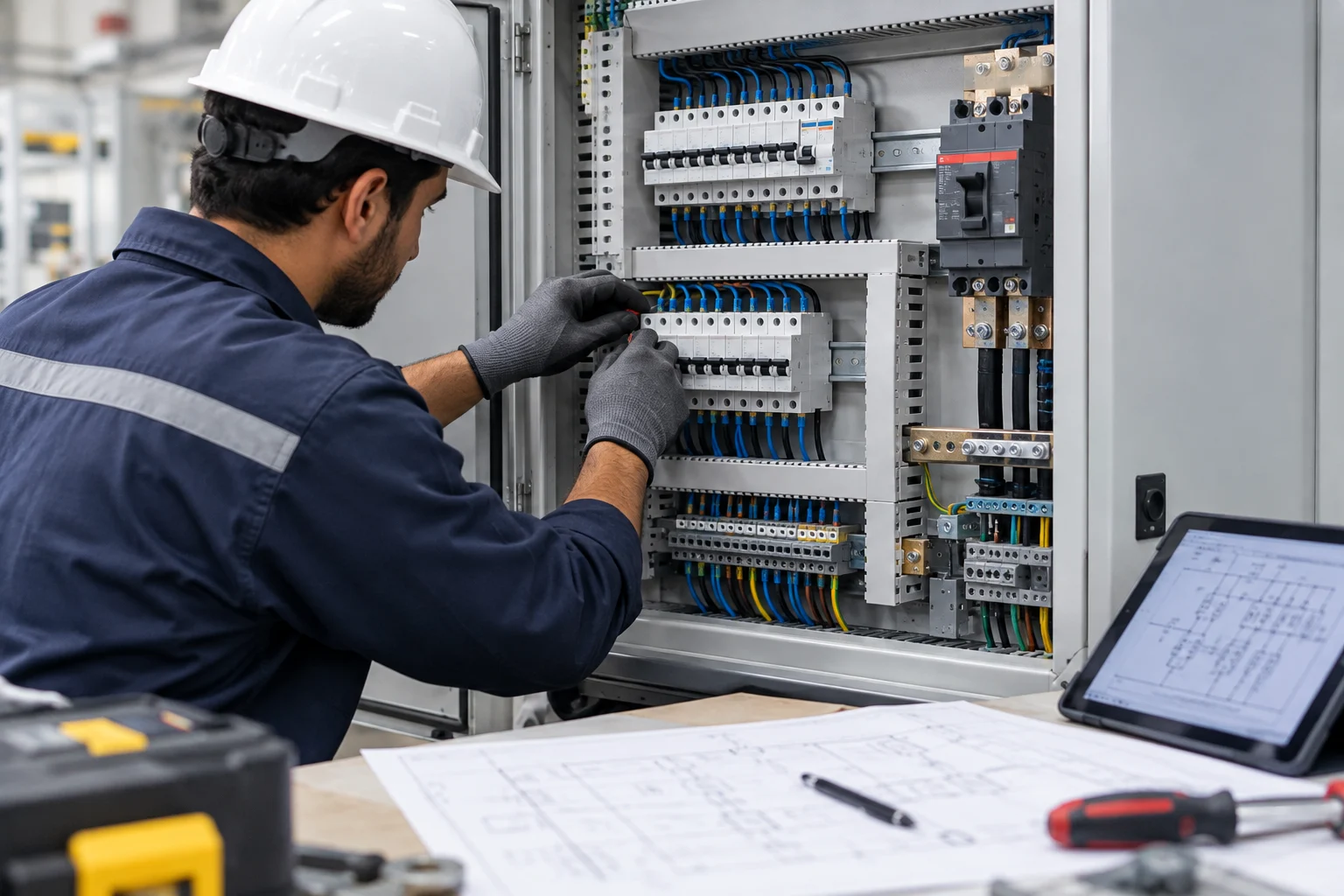
How Much Does a Custom Distribution Board Cost in Egypt? Pricing Factors Explained
You ask three suppliers for a quote on the same panel. You get back three very different numbers, and none of them explain why. That gap is normal. A distribution board is not a catalog item you can compare on price alone. Its cost depends on what goes inside it, how it is engineered, and who builds it, and each of those variables can shift the final number in ways a bare quote never shows.
For facility managers, contractors, and procurement teams in Egypt, understanding these cost drivers before requesting quotes changes what a comparison actually tells you. Without that context, you are not comparing suppliers; you are comparing a properly rated panel against one that might fail an inspection or, worse, an arc flash within its first year in service. This guide walks through exactly what shapes the price of a custom panel so you can read a quote the way an engineer would.
What Actually Determines the Cost of a Custom Electrical Panel?
There is no single line item that decides the price. A custom distribution board is priced as a combination of engineering time, component selection, enclosure specification, labor, and testing, and each of those stacks on top of the others. Two panels can look identical from the outside and still carry very different price tags once you account for the busbar rating inside, the breaker brand, or simply the number of hours an engineer spent on the single-line diagram before anyone touched a sheet of steel.
The main cost categories worth understanding are
- Panel size, current rating, and number of circuits
- Component brand and quality (breakers, contactors, relays, metering)
- Enclosure material, ingress protection (IP) rating, and finish
- Engineering, design, and documentation
- Testing, commissioning, and after-sales support
Walk through each of these before you compare quotes, and the numbers start making a lot more sense.
How Panel Size and Circuit Count Affect Pricing
Size and current rating are usually the first variables a supplier factors into a quote, simply because they set the physical scale of everything else. A small lighting distribution panel for a retail unit needs far less copper, fewer breakers, and a smaller enclosure than a main low voltage panel feeding an entire production line, so the two are never going to land in the same price bracket.
As current ratings climb, so does the size of the busbar, the cross section of internal cabling, and the footprint needed to maintain safe clearances around live components. A panel rated for higher fault currents also needs breakers and busbar bracing designed to withstand that fault level without deforming, which adds to both material and engineering cost. If your facility is planning future expansion, it is worth discussing spare capacity with your panel building partner at the design stage. Building in that headroom now is almost always cheaper than replacing an undersized board two years from now.
Distribution Board Type and Component Quality
This is where most of the price variation between suppliers actually comes from, more than any other single factor. A distribution board built with recognized-brand breakers, contactors, and protective relays will cost more upfront than one assembled with unbranded components. But over the equipment’s lifespan, the reliability, traceability, and spare parts availability that come with recognized components are usually worth that difference many times over.
ARC Technologies builds panels as an official ABB partner and official ABB panel manufacturer. In practice, that means the low-voltage components inside our boards, from air circuit breakers to molded case breakers and motor protection devices, come with documented performance data and long-term parts availability. It matters when you are budgeting, and it matters again two or three years later when a component needs replacing, and you need to know it is still available.
When comparing quotes, ask suppliers to specify:
- The brand and series of breakers and contactors used
- Whether components are genuine or aftermarket
- The panel’s rated short-circuit withstand capacity
- Warranty terms on both components and workmanship
A cheaper quote that skips this information is often cheaper for a reason. Somewhere in the protection scheme, corners were cut.
Enclosure Material and IP Rating: Why It Changes the Price
What is the difference between IP20 and IP65 enclosures, and does it matter for cost?
Yes, significantly, and the required rating depends entirely on where the panel will sit. IP ratings describe how well an enclosure resists dust and moisture ingress. An indoor electrical room with a controlled climate might only need IP42 protection. A panel installed outdoors, in a washdown area, or in a dusty production environment needs IP65 or higher, and that difference shows up directly on the invoice.
Higher IP ratings require heavier gauge steel, gasket seals, cable gland plates, and sometimes stainless steel construction for corrosive environments. Powder coating, custom paint finishes, and reinforced door hinges for larger enclosures add cost as well. It feels like an easy place to trim a quote, but specifying the correct rating from the start avoids paying for premature corrosion repairs, or worse, a panel failure caused by moisture that should never have reached the components in the first place.
Engineering, Design, and Certification Costs
A custom panel starts long before any metal is cut, with a single-line diagram, load calculations, and a general arrangement drawing. This engineering phase sizes the panel to the facility’s actual load, calculates protection coordination so breakers trip in the right sequence during a fault, and confirms clearances against relevant standards.
Reputable manufacturers reference recognized standards during design, such as the IEC 61439 series for low-voltage switchgear and controlgear assemblies, which sets requirements for temperature rise, short-circuit withstand, and protection against electric shock. Panels engineered against these standards typically cost more than an unengineered assembly because of the calculation, testing, and documentation behind them, but they also carry far lower operational risk. If your facility needs load studies or protection coordination reviewed before a new panel is specified, ARC Technologies’ diagnostics and testing services can validate the existing infrastructure first, so the new design is built on real numbers rather than assumptions.
Installation, Testing, and Commissioning
Does installation cost get included in the panel price, or is it separate?
It depends on the scope agreed with your supplier, and this is one of the most common sources of confusion when comparing quotes. Some suppliers price the panel as a standalone product and quote installation, cabling, and commissioning separately. Others provide a turnkey price covering delivery, positioning, termination, and testing, and the two approaches are not directly comparable unless you read the fine print.
Before commissioning, a properly built panel should go through factory acceptance testing, insulation resistance checks, and functional testing of protective devices. On site, this is followed by torque verification of connections, phase rotation checks, and, in many facilities, a thermographic scan after the panel has run under load for a period. Skip this step to save money, and you are trading a small saving now for a much larger risk later, since loose connections and undetected hot spots are hard to catch any other way. OSHA’s guidance on electrical safety-related work practices explains why qualified testing and de-energization procedures matter so much at this stage.
Typical Price Ranges for Custom Panels in Egypt
Because panel pricing depends so heavily on current rating, component brand, enclosure specification, and site conditions, quoting a single fixed price for “a panel” without knowing these details would not be accurate, and any supplier who does so is guessing. A small distribution board for a retail fitout, a motor control panel for a production line, and a main low voltage switchboard for an industrial facility sit at very different points on the cost scale, even before component brand enters the picture.
Rather than anchoring to a number that will not reflect your specific requirement, the more useful exercise is to request itemized quotes that separate:
- Component cost by brand and rating
- Enclosure and fabrication cost
- Engineering and documentation
- Installation and commissioning
- Warranty and after-sales terms
Line them up this way, and you can compare suppliers on the same basis instead of chasing a single bottom-line figure that might be hiding a difference in quality.
How to Choose a Reliable Electrical Panel Supplier in Egypt
What should you check before selecting an electrical panel supplier in Egypt?
Start with manufacturing capability rather than price alone. An electrical panel supplier in Egypt that manufactures panels locally, rather than importing pre-built boards, can usually adjust designs to your site conditions and respond faster if a modification is needed after installation. That responsiveness is hard to put a number on, but it shows up the first time something needs adjusting on short notice.
Look for suppliers who can show:
- A physical panel building facility, not just a trading office
- Documented partnerships with recognized component manufacturers
- Willingness to share load calculations and single line diagrams before build
- Local after-sales support and spare parts availability
- Experience with your specific facility type, whether that is a production plant, a commercial building, or a utility installation
ARC Technologies operates panel building and manufacturing activity across Egypt as part of a wider electromechanical service offering. That means the team that designs your distribution board is also the team positioned to support maintenance, retrofit, or expansion work down the line, through our maintenance services and modernization and retrofit services, rather than handing you off to someone else once the invoice is paid.
Why Distribution Board Quality Affects Long-Term Cost, Not Just Upfront Price
Step back from the purchase price for a moment and think about total cost of ownership instead. A panel built with lower-grade components may look attractive on the initial quote, but nuisance tripping, premature breaker failure, and unavailable spare parts add up fast over a few years of operation. Facilities that deal with frequent panel-related downtime often trace the root cause back to the same place: an undersized or poorly specified board that was chosen on price at the outset and never revisited.
A well-engineered distribution board tells a different story. Sized correctly for present and near-future load, built with traceable components, and commissioned with proper testing, it tends to cost less over its service life even though the initial invoice is higher. That is the calculation worth running before a supplier is selected purely on the lowest number.
Getting an Accurate Quote for Your Panel
So much of the final price depends on site-specific factors that the only reliable way to know what a custom panel will cost for your facility is to have it properly assessed, not estimated from general figures. Load requirements, available space, environmental conditions, and future expansion plans all factor into a quote that actually holds up once work begins.
If you are planning a new installation, replacing an aging panel, or upgrading circuit capacity, request a technical consultation so an engineer can review your requirements and return a scoped, itemized quote instead of a rough estimate.

Leave a comment